Reaching The Stars
We are here to visualize your journey while you're reaching the stars.
How do stars work?

LIGHT CURVES
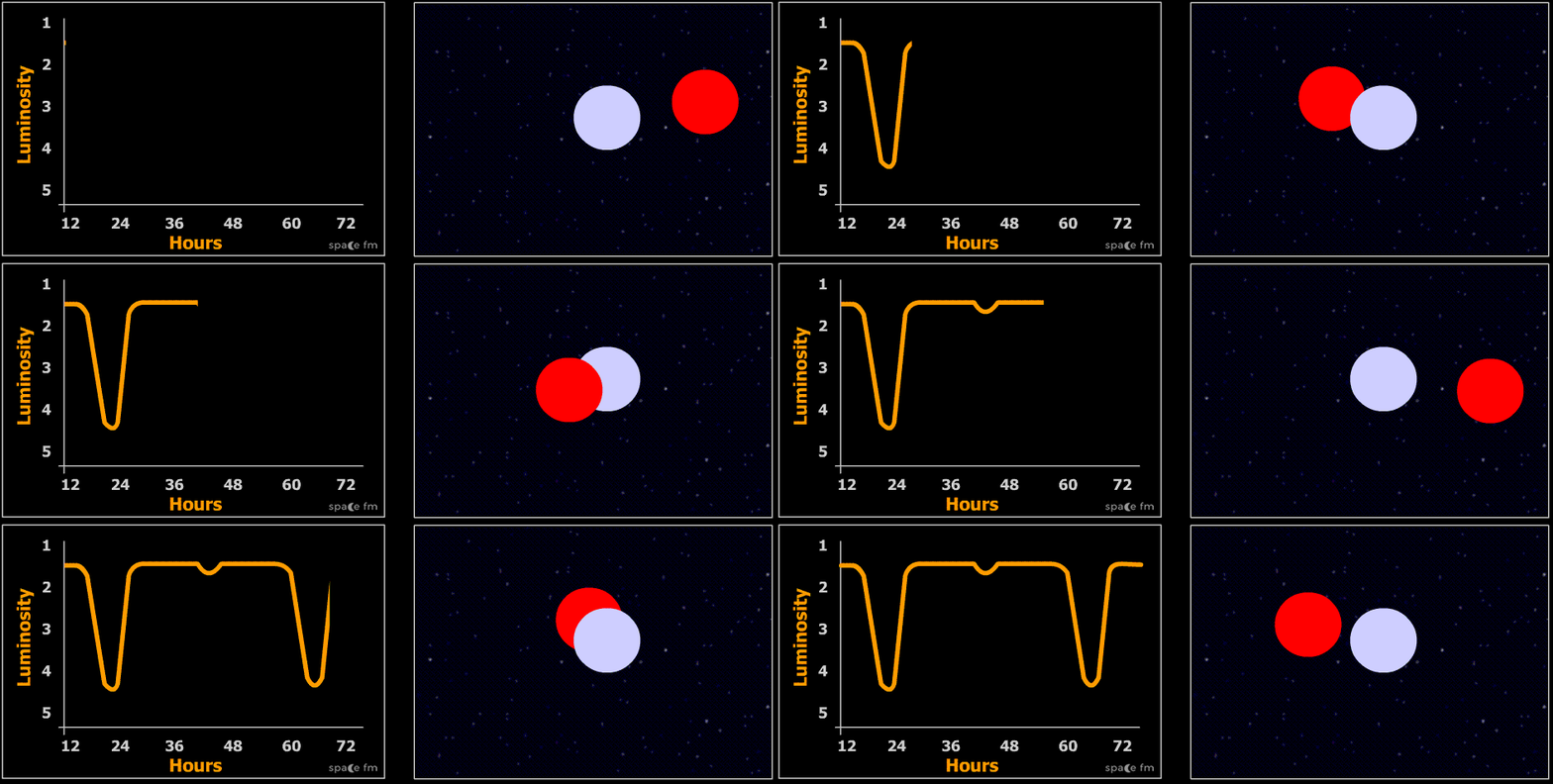
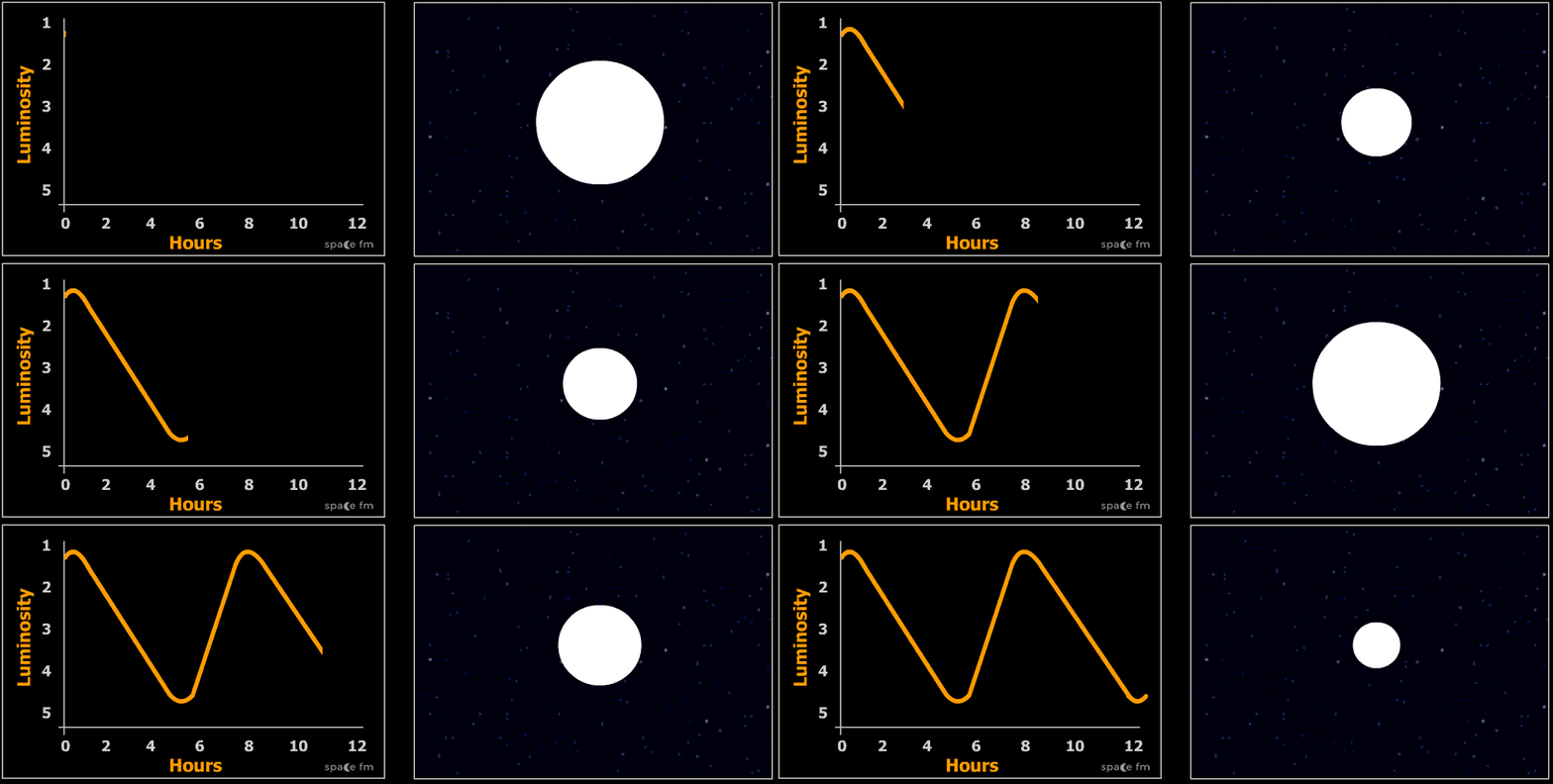
In astronomy, a light curve is a graph of light intensity of a celestial object or region as a function of time. The light is usually in a particular frequency interval or band. The study of the light curve, together with other observations, can yield considerable information about the physical process that produces it or constrain the physical theories about it.

WHY DO STARS BLINK?
As light from a star races through our atmosphere, it bounces and bumps through the different layers, bending the light before you see it. Since the hot and cold layers of air keep moving, the bending of the light changes too, which causes the star's appearance to wobble or twinkle.

FUSION REACTIONS:
Nuclear Fusion reactions power the Sun and other stars. In a fusion reaction, two light nuclei merge to form a single heavier nucleus. The process releases energy because the total mass of the resulting single nucleus is less than the mass of the two original nuclei. The leftover mass becomes energy. Einstein’s equation (E=m.c²), which says in part that mass and energy can be converted into each other, explains why this process can involve many different elements in the periodic table.
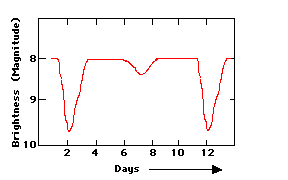
HOW LONG ARE THE PERIODS OF STARS?
If the light curve we measured looked like the graph beside, we would identify the object as an eclipsing binary star. The light curve also shows us that it takes 10 days for one of the stars in the binary to orbit completely around the other. Astronomers would say that the binary system has an orbital period of 10 days.